Seigaiha waves worked in dashed running stitch on indigo.
- First documented
- 1600s
- Origin
- northern Japan, Japan
- Fiber
- cotton
- Weave
- running-stitch needlework on woven cloth
- Family
- motifs
Plate No. 164 · pattern
Sashiko
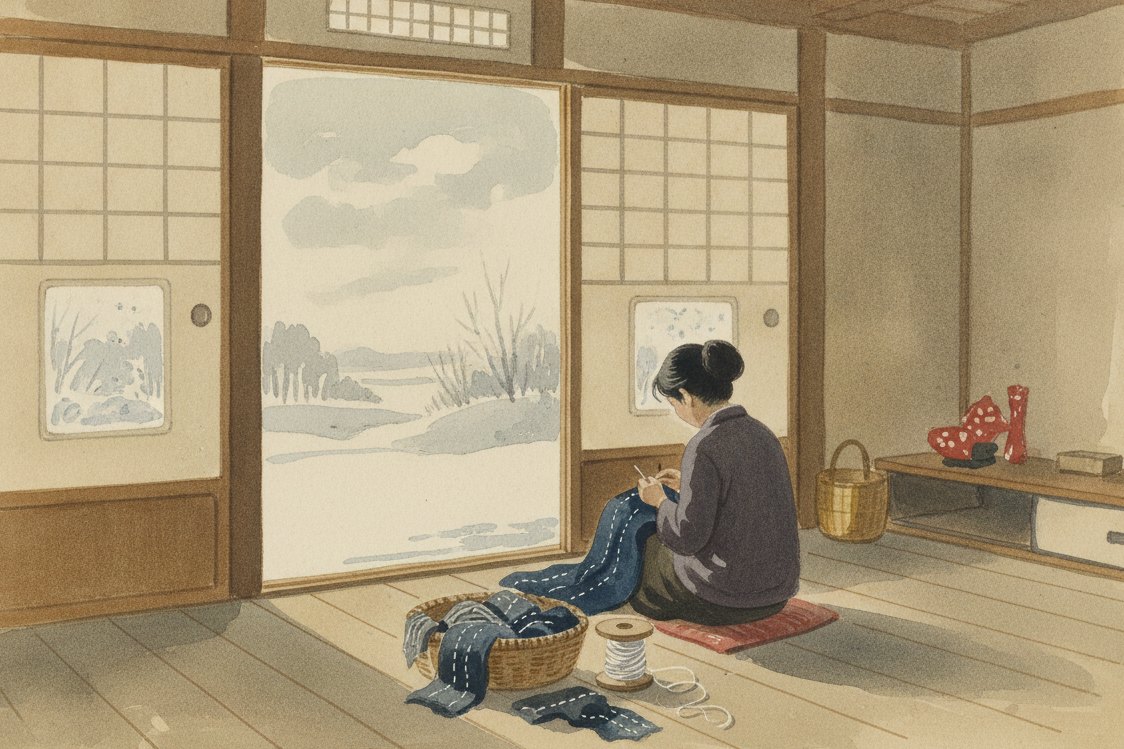
Sashiko is the running-stitch needlework of rural northern Japan, born as thrift: farming and fishing families layered and quilted worn indigo cloth together with rows of small white stitches to reinforce and warm it, a practice bound up with the patched boro textiles of the same regions. Over the Edo period the practical stitching bloomed into geometry, and named patterns spread, the seigaiha wave, the asanoha hemp leaf, the shippo seven treasures, all worked in white cotton thread on indigo. Once the mending of the poor, sashiko is now a celebrated craft and a touchstone of the global visible-mending revival.
Named for
From the Japanese sashiko, little stabs, for the small running stitches that make the pattern.
Often confused with
From the journal
Sources & References
- 1.Sashiko, Wikipedia
- 2.Boro (textile), Wikipedia