Plate No. 049pattern
- First documented
- Antiquity
- Origin
- Maritime Southeast Asia and Central Asia, Indonesia
- Fiber
- silk, cotton
- Weave
- resist-dyed yarns, plain weave
- Family
- motifs
Plate No. 049 · pattern
Ikat
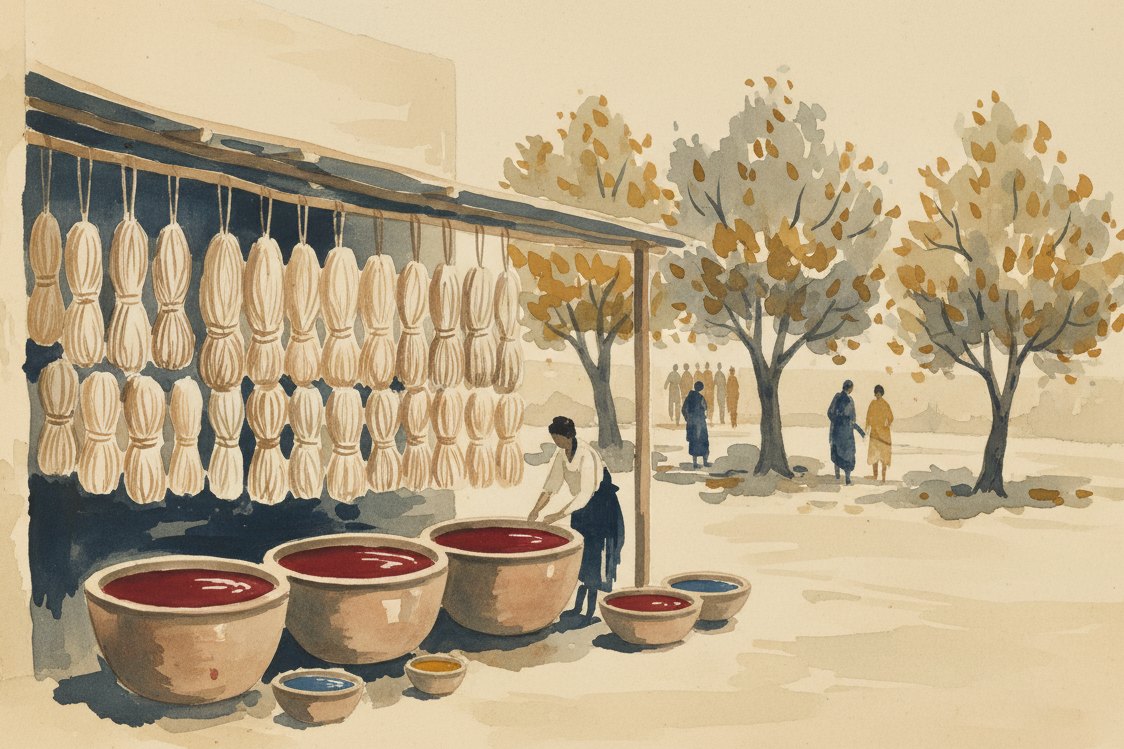
Ikat is a pattern made by resist-dyeing the yarns before weaving: bundles of warp or weft are bound tightly where the dye must not reach, dyed, and then woven, so the pattern emerges from the threads themselves. No two threads align perfectly on the loom, and that slight misregistration produces ikat's signature feathered, flame-like edges, the blur that is not a flaw but the proof of the technique. Traditions run from Indonesia and India to the silk ikats of Uzbekistan and the kasuri cottons of Japan.
Named for
From the Malay and Indonesian mengikat, to tie or bind: the yarns are tie-dyed before they ever reach the loom.