The classic shawl palette.
- First documented
- c. 1600s
- Origin
- Persia and Kashmir, Iran
- Fiber
- wool, silk, cotton
- Weave
- woven or printed
- Family
- motifs
Plate No. 047 · pattern
Paisley
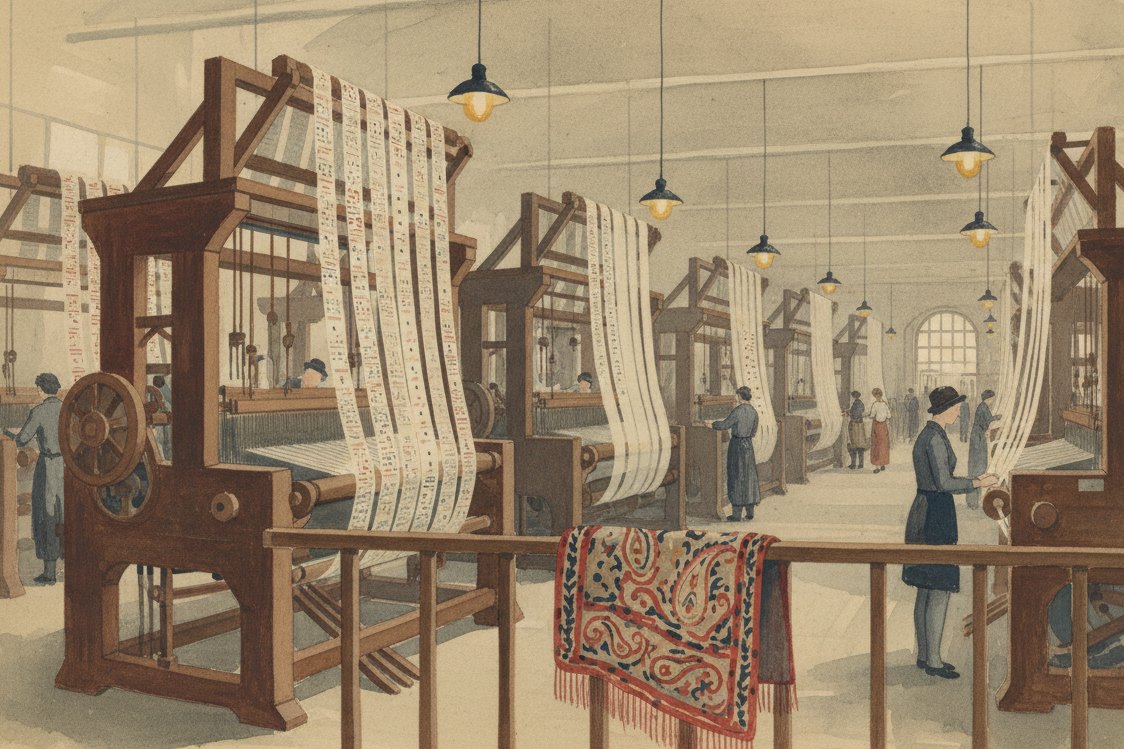
Paisley is a pattern built from the boteh, a curved teardrop with a bent tip, of Persian and Kashmiri origin. It came west on Kashmir shawls in the late eighteenth century, woven so finely that a single shawl could take years. European mills rushed to imitate them, and the Scottish town of Paisley did it so successfully that in English the motif took the town's name. The shape has carried meanings from a cypress shoot to a flame to a fertile seed, and it returns to fashion in every generation, most loudly in the psychedelic 1960s.
Named for
Named, in English, for Paisley in Scotland, the weaving town that mass-produced the design in the nineteenth century. The motif itself is the boteh, a Persian word for shrub or cluster of leaves.
In the record
- 1960sPsychedelic fashion revived paisley so thoroughly that Fender printed guitars with it.
Sources & References
- 1.Paisley (design), Wikipedia
- 2.Boteh, Wikipedia