Plate No. 111fabric
The honey color and slub of wild forest silk.
- First documented
- Antiquity
- Origin
- Indian subcontinent, India
- Fiber
- wild silk
- Weave
- plain weave, wild silk
- Family
- plain
Plate No. 111 · fabric
Tussar
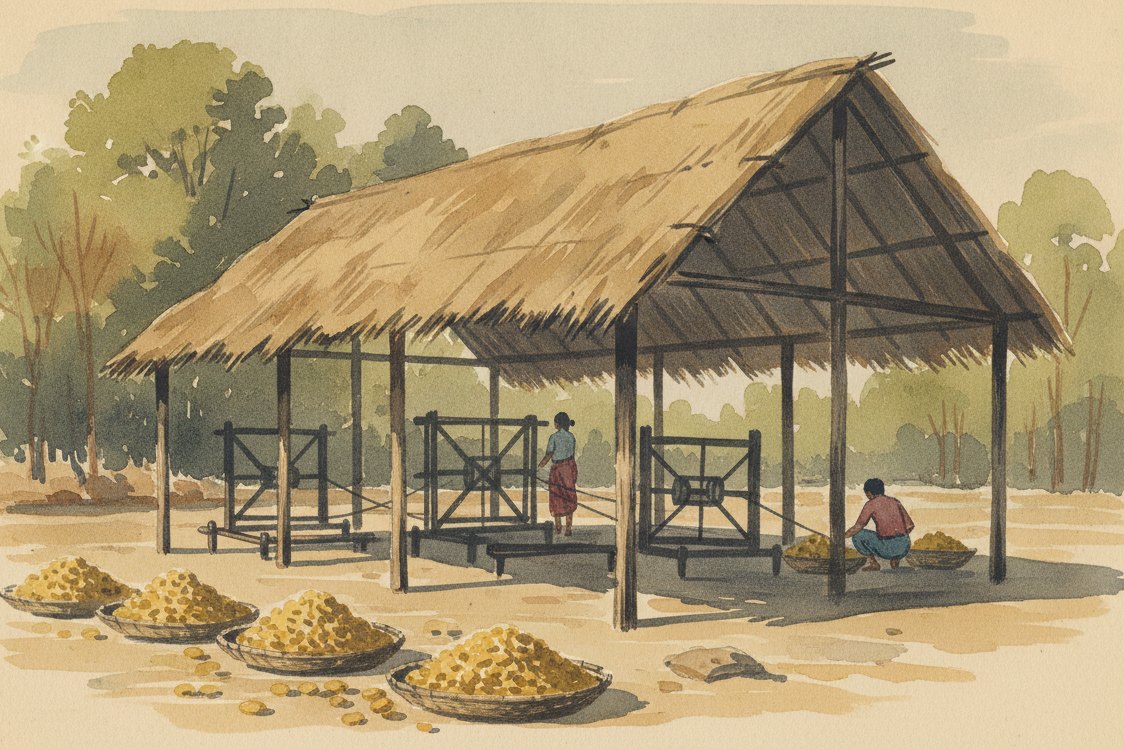
Tussar is the great wild silk of India, reeled from the cocoons of moths that feed on forest trees rather than cultivated mulberry. Its fiber is coarser, shorter, and naturally golden-tan or honey-brown, so the cloth is dry, textured, and richly slubbed rather than smooth and white like mulberry silk. Because the moths are wild and the cocoons often gathered after the moth emerges, tussar is sometimes called the more ethical silk, and its warm uneven luster makes it a favorite for saris, jackets, and furnishing.
Named for
From the Sanskrit and Hindi tasar, the shuttle or the wild silkworm cocoon.
Sources & References
- 1.Tussar silk, Wikipedia
- 2.Wild silk, Wikipedia