Plate No. 147fabric
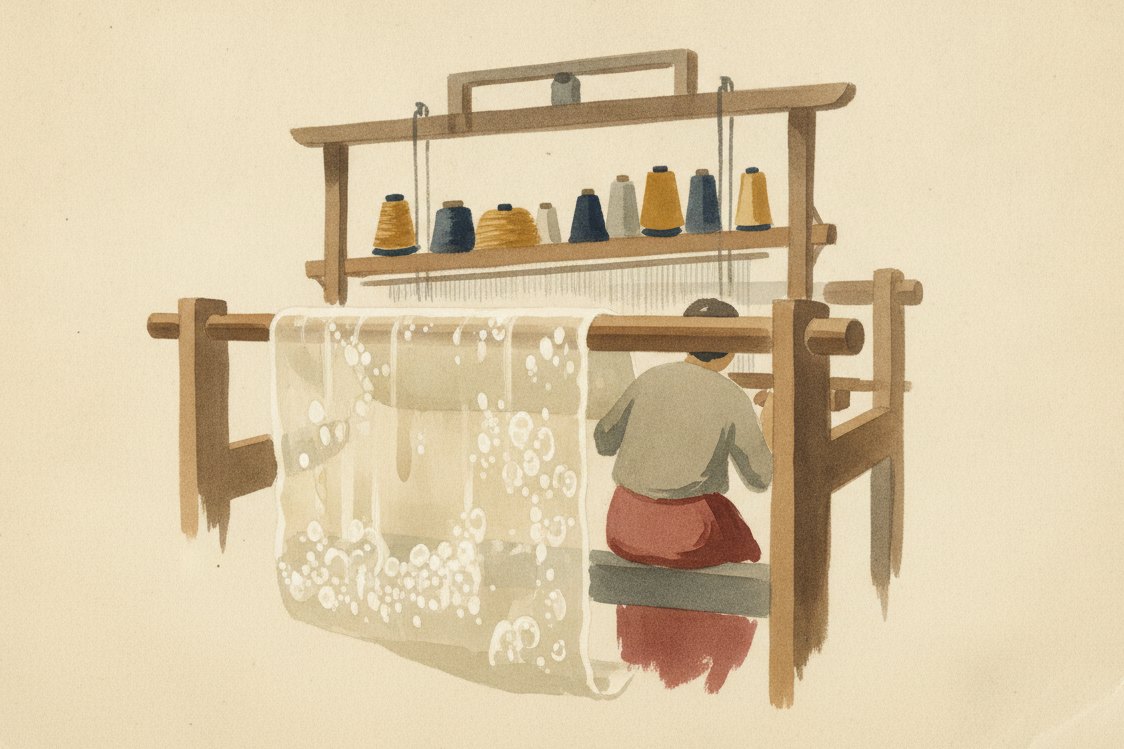
A finer, blistered relief raised by differential shrinkage.
- First documented
- 1900s
- Origin
- France, France
- Fiber
- silk, cotton
- Weave
- compound weave with a blistered surface
- Family
- pile
Plate No. 147 · fabric
Cloqué
Cloqué is a close cousin of matelassé: a compound fabric whose surface puckers into small irregular blisters, raised by weaving together yarns or layers that shrink at different rates so one buckles against the other. Where matelassé reads as a regular quilt, cloqué reads as a finer, more random blister, and a true cloqué's relief is often set by the differential shrinkage of the yarns rather than by binding points alone. It gives eveningwear and upholstery a lively, dimensional, almost embossed surface.
Named for
From the French cloqué, blistered, from cloque, a blister.