A small floral sprig stamped from a carved block.
- First documented
- Antiquity
- Origin
- Rajasthan, India
- Fiber
- cotton
- Weave
- pattern stamped from hand-carved wooden blocks
- Family
- prints
Plate No. 156 · pattern
Block Print
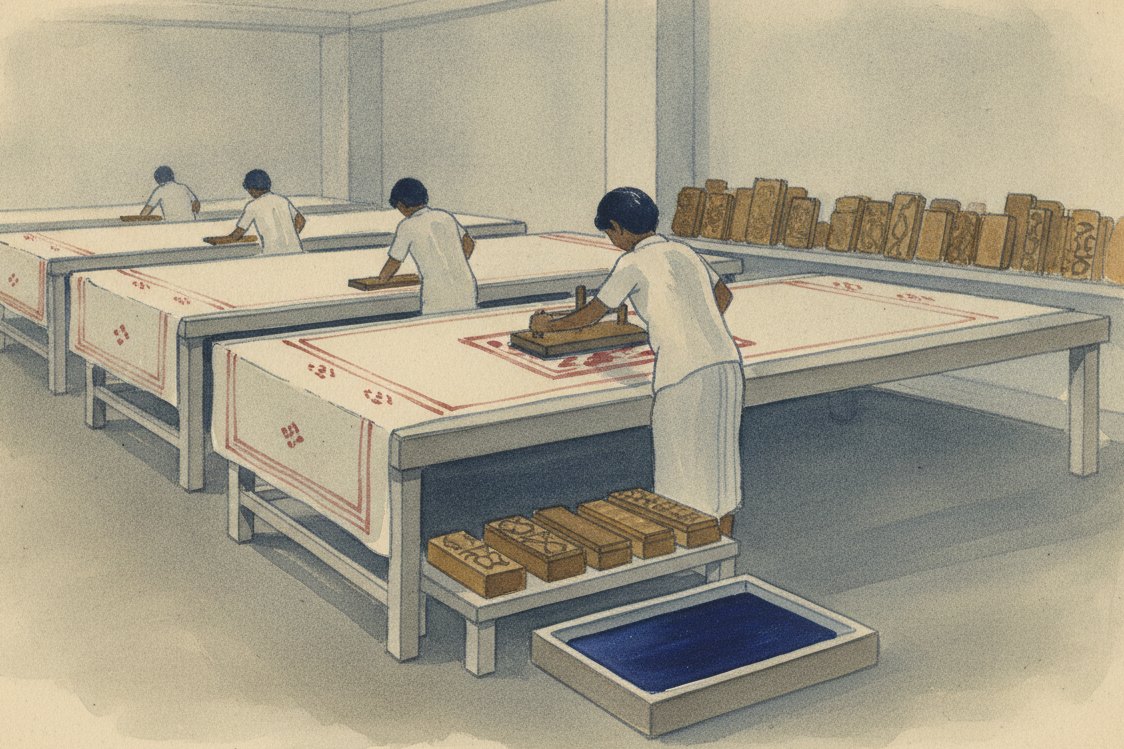
Block printing is the oldest way of putting a repeating pattern onto finished cloth: a craftsman carves a design in relief into a wooden block, charges it with dye, and stamps it across the fabric, registering each impression to the last by eye and by small guide pins. The hand-block printing towns of Rajasthan, Bagru and Sanganer above all, built a tradition of small floral sprigs, the buti, and dense field patterns that fed the Indian printed-cotton trade and the European taste for calico and chintz. Slower and subtler than the engraved rollers that industrialized printing, it survives as a prized craft.
Named for
Descriptive: the pattern is printed by stamping the cloth with carved wooden blocks.
Sources & References
- 1.Woodblock printing on textiles, Wikipedia
- 2.Textile printing, Wikipedia