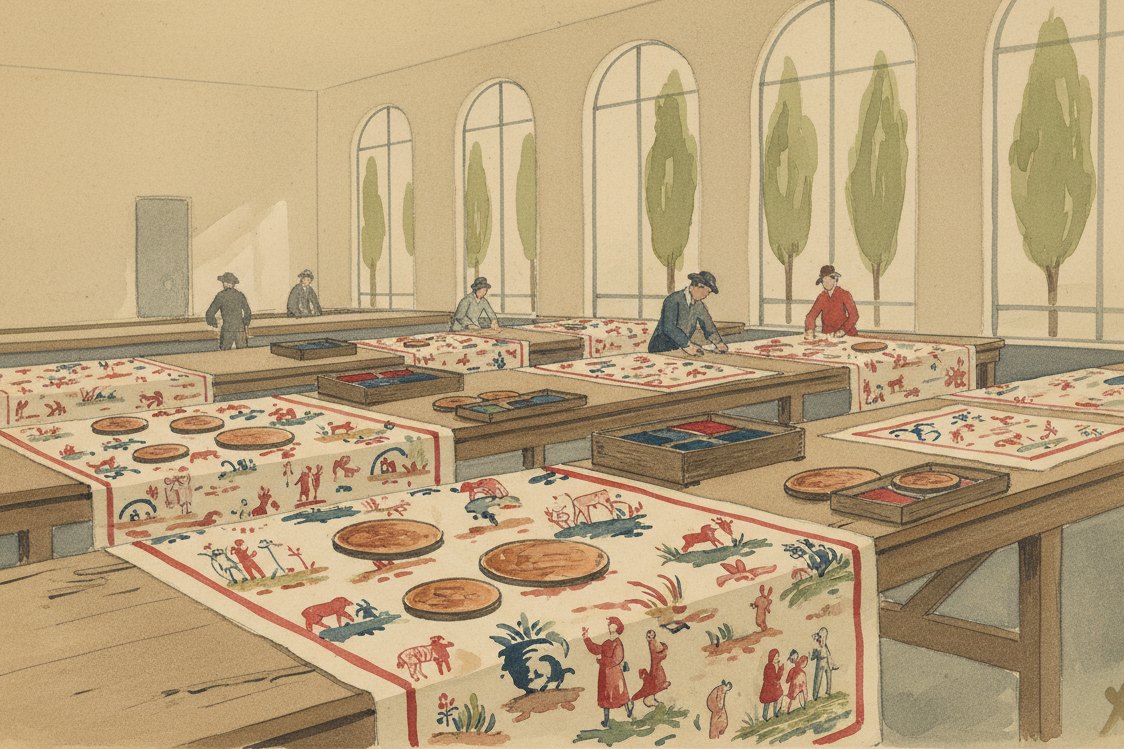
Stylized single-color sprig in the toile manner. Classic toile carries engraved pastoral scenes, shown in the illustration.
- First documented
- 1760
- Origin
- Jouy-en-Josas, Ile-de-France, France
- Fiber
- cotton, linen
- Weave
- plain weave, copperplate printed
- Family
- motifs
Plate No. 077 · pattern
Toile de Jouy
Toile de Jouy is the scenic print: pastoral vignettes, shepherdesses, picnics, follies, and hot air balloons, printed in a single color on pale cotton, the figures floating in repeat with no ground line. Christophe-Philippe Oberkampf founded the printworks at Jouy-en-Josas in 1760, and its copperplate printing achieved a fineness of line woodblocks never could, turning cloth into something like an engraved book you could upholster with. The illustrated plate above shows the world of the printworks; the render below is a stylized single-color sprig in the toile manner, since the classic toile is defined by its engraved scenes rather than by a repeating geometric motif.
Named for
Toile is simply French for cloth or canvas; de Jouy names the printworks village of Jouy-en-Josas, southwest of Paris.
In the record
- 1760Oberkampf opened the manufactory at Jouy-en-Josas; its scenic single-color prints defined the genre.
Sources & References
- 1.Toile, Wikipedia
- 2.Toile de Jouy, Wikipedia