The lustrous continuous filament, shown with a satin sheen.
- First documented
- Antiquity
- Origin
- China, China
- Fiber
- silk
- Weave
- the filament fiber, often woven satin or plain
- Family
- fibers
Plate No. 128 · fabric
Silk
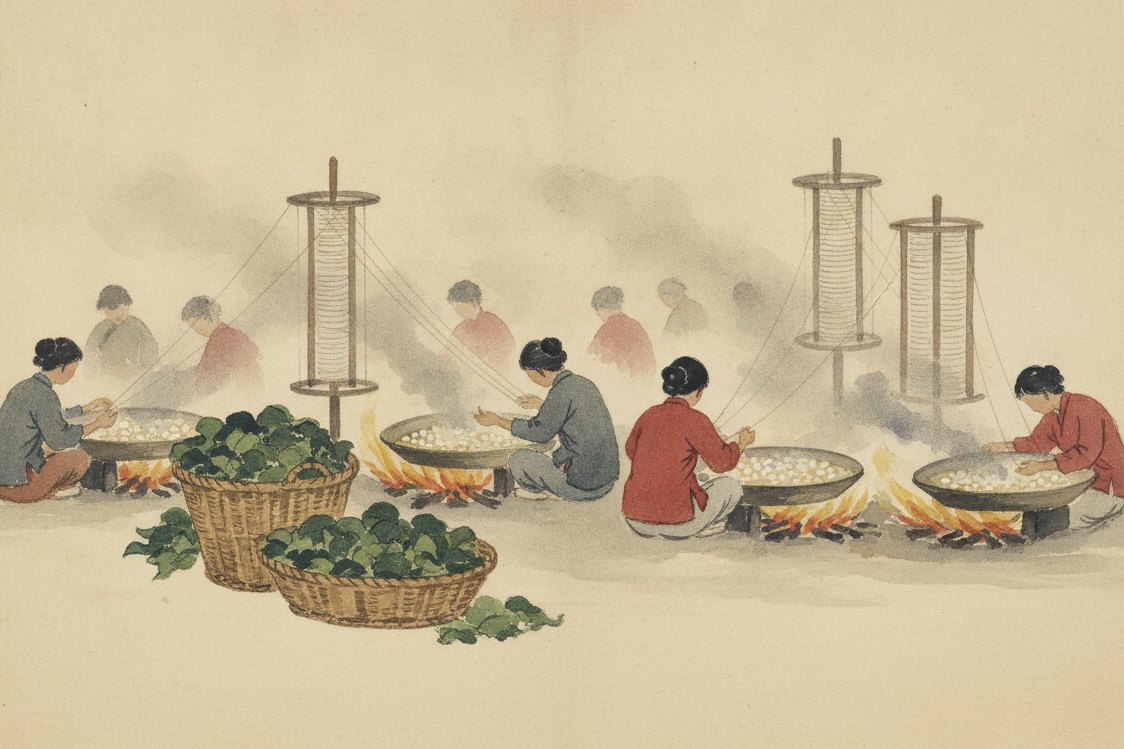
Silk is the lustrous filament unwound from the cocoon of the mulberry silkworm, the only natural fiber that comes as a continuous strand rather than short staple, which gives it its smoothness, strength, and sheen. China discovered sericulture thousands of years ago and guarded the secret on pain of death, building the network of trade routes that history named the Silk Road. The secret eventually leaked west to Byzantium and beyond, but China's monopoly made silk a currency of empires. Light, strong, and brilliantly dyeable, it remains the benchmark of luxury cloth and the model that rayon and nylon were invented to imitate.
Named for
From the Old English sioloc, ultimately from a Greek and Latin name for the Seres, the silk people of the East.
From the journal
Sources & References
- 1.Silk, Wikipedia
- 2.Sericulture, Wikipedia