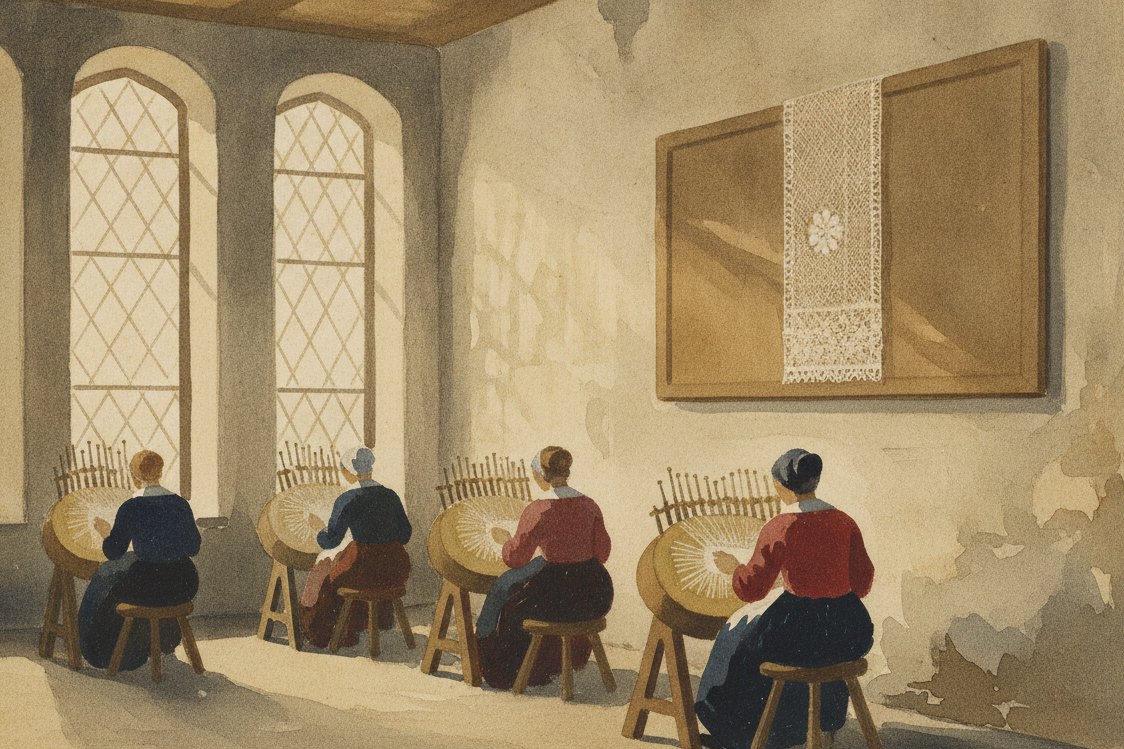
A stylized impression of the net-and-floral openwork.
- First documented
- 1500s
- Origin
- Flanders and Italy, Belgium
- Fiber
- linen, silk, cotton
- Weave
- looped, twisted, or knotted openwork
- Family
- lace
Plate No. 107 · fabric
Lace
Lace is cloth made of holes: an openwork built directly from thread by looping, twisting, plaiting, or knotting, with no woven ground beneath. It split early into two great hand traditions, needle lace built stitch by stitch with a single thread and needle, and bobbin lace plaited from many threads wound on bobbins over a pillow. Venice, Flanders, and later Honiton and Chantilly made fortunes on it, and a yard of fine lace could cost more than the gown it trimmed. The machine net of the early 1800s and the Jacquard-driven lace looms of Nottingham eventually made lace cheap, ending its reign as portable wealth.
Named for
From the Latin laqueus, a noose or snare, through Old French laz: lace is made of loops and ties.
Often confused with
Sources & References
- 1.Lace, Wikipedia
- 2.Bobbin lace, Wikipedia