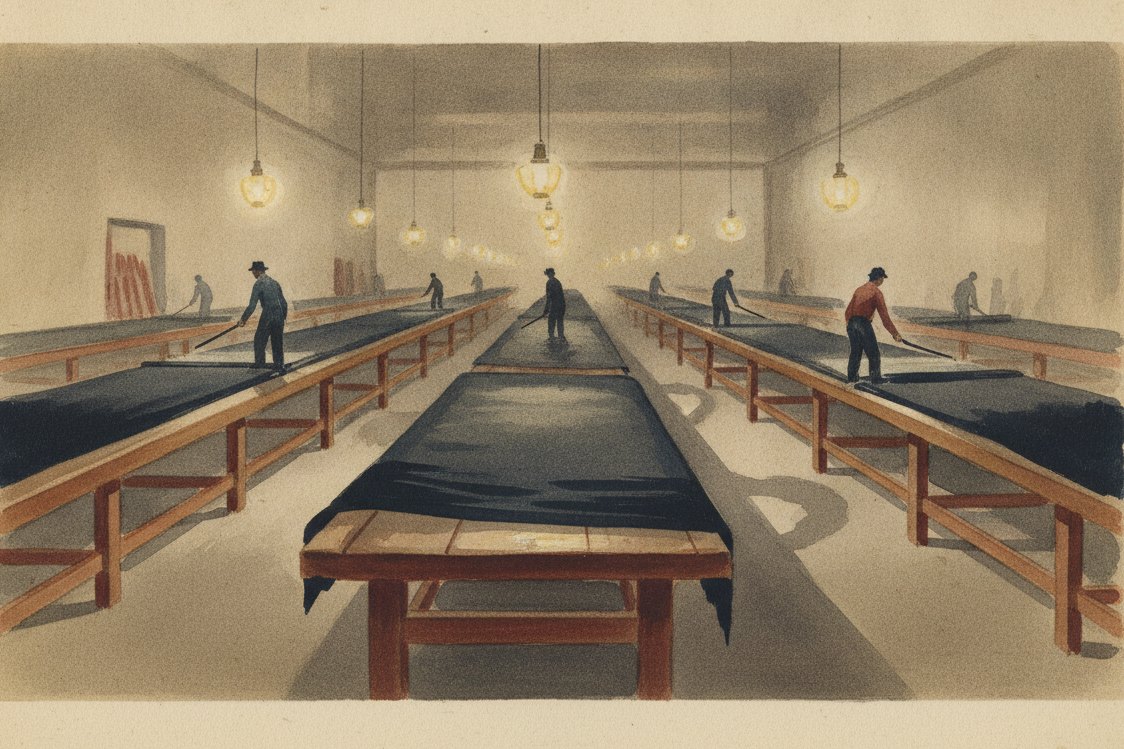
The render is a stylized impression of the sheared cotton face.
- First documented
- Middle Ages
- Origin
- Egypt and the Mediterranean, Egypt
- Fiber
- cotton, linen
- Weave
- stout cotton, often weft pile
- Family
- pile
Plate No. 072 · fabric
Fustian
Fustian is the family name behind half the workwear in this catalogue: stout cotton cloths, often woven with an extra weft that could be left plain or cut into pile. Medieval fustian mixed linen warp with cotton weft; industrial Lancashire made all-cotton fustians the uniform of labor, and the cutters who slit the pile by hand, walking miles per bolt down a cutting table, were a trade of their own. Cut and ribbed, fustian becomes corduroy; cut flat, moleskin; cut soft, velveteen. The family tree of hard-wearing pile starts here.
Named for
Traditionally from Fustat, the old quarter of Cairo where the cloth was traded; the derivation is traditional. The word also came to mean pompous language, cloth and bombast both being thick stuff.