Heathered island wool; flecks of many dyes spun into one yarn.
- First documented
- 1846
- Origin
- Outer Hebrides, Scotland, United Kingdom
- Fiber
- wool
- Weave
- 2/2 twill, handwoven
- Family
- twills
Plate No. 063 · fabric
Harris Tweed
Harris Tweed is the only fabric in the world protected by its own Act of Parliament: by law, cloth carrying the Orb mark must be handwoven by islanders at their homes in the Outer Hebrides from pure virgin wool dyed and spun in the islands. The trade began in 1846 when Lady Dunmore, widow of the Earl of Dunmore, had the local tweed copied for her clan and began selling it to her circle; the Orb certification mark followed in 1911 and the protecting Act in 1993. Every length is still inspected and stamped, which makes Harris Tweed that rare thing, a fabric with a legal definition and a paper trail to match.
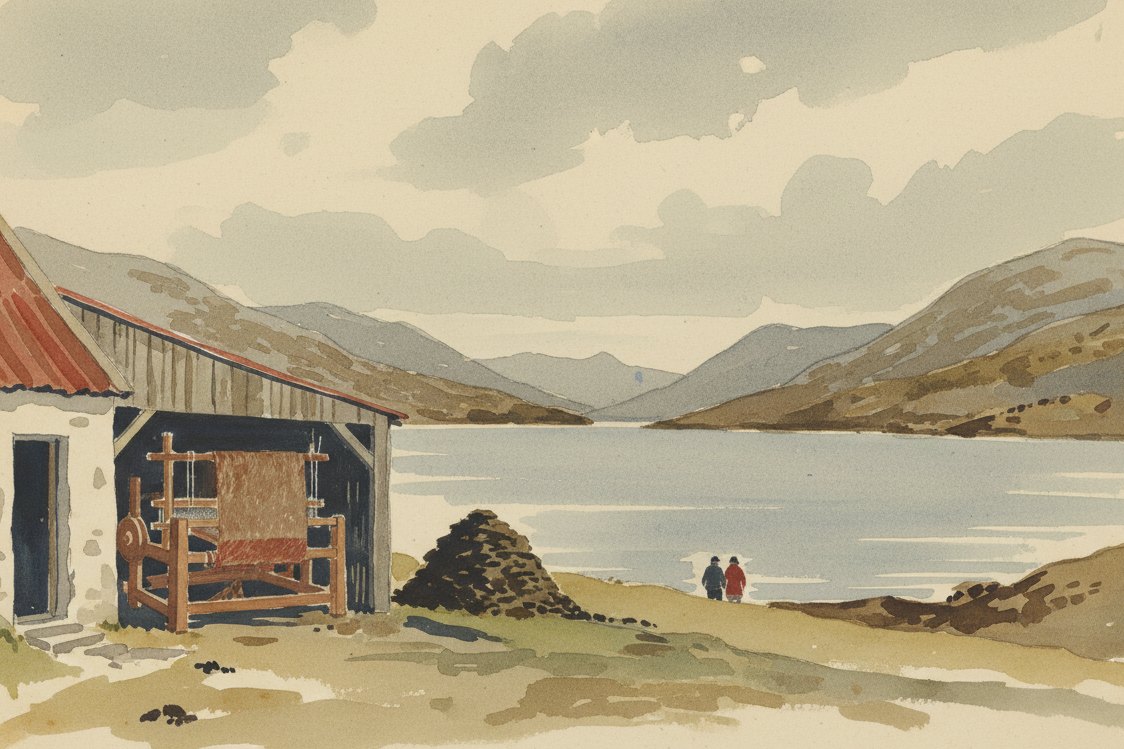
Named for
Named for Harris in the Outer Hebrides, the island where Lady Dunmore first promoted the local cloth to British society.
In the record
- 1911The Orb certification mark was granted, the oldest British certification mark still in use.
- 1993The Harris Tweed Act fixed the definition in law: handwoven by islanders at home in the Outer Hebrides.
Sources & References
- 1.Harris Tweed, Wikipedia
- 2.The Harris Tweed Authority, Harris Tweed Authority